
dialectical behavioral therapy in west los angeles
DBT skills, delivered THE way YOU NEED them.
The DBT Your Way Program provides a tailored, personalized, and structured opportunity to learn DBT skills outside of the traditional group format. Move at your own pace, focus on the situations that matter most in your life, and adapt each skill so it feels practical, relevant, and accessible to apply in real time.


DBT in West LA
Who the DBT Your Way Program is for
-
Managing big and difficult emotions
Dissociation and being in the present moment
Understanding why you feel so intensely
Black-and-white and inflexible thinking
Unhealthy relationship patterns
Relying on substances and other maladaptive coping strategies
Feeling like you go from 0-100
Setting boundaries and self-advocacy
Accepting the cards you’ve been dealt
-
Teen, adult, parent, or couple
Client with an existing primary therapist who wants to add Individualized DBT Skills Training to their treatment plan
New client who isn’t interested in doing individual therapy and prefers the structure of 1-1 skills training sessions
New client who feels like you need more support than once a week therapy
Private or high-profile person in need of a confidential and discreet way to learn the DBT skills
Client who tried Comprehensive DBT and did not find it worked for you
Learner whose learning style and needs can’t be accommodated in a group format


the Program
What is DBT Your Way?
This is a customized program that helps people struggling with emotion regulation, addictions, perfectionism, and more learn tangible skills that help them navigate their lives with less suffering.
This program is about taking mindful and values-aligned action toward sustainable, meaningful change that outlasts your time in therapy—because DBT skills are ones that last a lifetime.
Whether you feel beholden to your feelings, like you’re never doing “enough,” or like it’s just time to try something different, we will find a way to DBT Your Way.
dialectical behavioral therapy in west los angeles
the HARD truth is, ONE SIZE FITS all just DOESN’T always fit.
Maybe you’re unsure about joining a group, looking for a more confidential and discreet space to learn the skills, or have a learning style that isn’t conducive to the group format. DBT Your Way offers the flexibility you’ve been looking for.
Ready to break the one-size-fits all mold?
What to expect from DBT Your Way.

-
Who: Teens, adults, parents, or couples
What: 45-50 minute 1-1 skills training sessions covering your customized DBT curriculum consisting of mindfulness, distress tolerance, emotion regulation, and/or interpersonal effectiveness skills.
Sessions typically follow this format (although—you guessed it—this is flexible!):
Mindfulness exercise: 5 minutes
Homework review: 5 minutes
Skills training and homework assignment: 35-40 minutes
What else: Option to add skills for perfectionism, substance use, parenting, and more, depending on your needs.
When: Options of weekly sessions, every other week sessions, or multiple times per week sessions.
Where: In-person in Los Angeles or online
How long: It depends! Going through every single DBT skill typically takes 25 sessions, including the assessment appointment and graduation session. We will work with you to create a schedule—whether that means doing DBT Your Way for 1 month or 1 year. And if our plans change along the way, you’re never locked in.
-
Pre- and post-therapy measures to track symptoms
50-60 minute assessment appointment
Collaboration with other providers (e.g., therapists, psychiatrists, teachers, etc.)
Optional family/partner sessions
DBT handouts and worksheets
Graduation session to review progress and create a post-treatment plan
Optional maintenance sessions after graduation
-
Assessment appointment (50-60 minutes): fees range from $270-$360 depending on the therapist
1-1 skills training sessions (45-50 minutes): fees range from $225-$300/session
*There is no contractual obligation involved in DBT Your Way. If at any point your plans change or you feel you’ve gotten what you need from your program, you can stop at any time.
*Sliding scale options available as low as $150/session depending on need.
*Superbills are provided and clients can expect to be reimbursed for these sessions as they would be for individual therapy, depending on their plan and benefits.
-
Here is an example of DBT Your Way in action:
Anne is 25 years old and feels like, despite being in therapy for 5 years, she’s not any better than she was when she started.
When something goes wrong, she’s quick to rage. Whenever she scrolls social media she feels an overwhelming loneliness. Her emotions feel all-consuming and never-ending.
Anne meets with a therapist at Sawtelle Psychotherapy Group and tells them she wants relief—fast—but she’s on a budget and can’t afford more than 12 sessions. She plans to ask for a raise soon, but isn’t sure she’ll get it.
Anne and her therapist decide the best use of their sessions would be to focus on Distress Tolerance skills to help her manage and respond to her big emotions. Because Anne is planning to ask for a raise, her therapist suggests dedicating 2 sessions to covering a few Interpersonal Effectiveness skills that may increase the odds of her boss saying “yes.”
Because Anne wants to feel better as fast as possible, she and her therapist agree to meet twice a week for 6 weeks. After her assessment session, Anne and her therapist meet for 10 individual skills training sessions. Then they meet for a graduation session to review progress, make a plan for continued skills use, and discuss which signs might indicate a maintenance session would be helpful.
Investment: Anne saw a therapist whose fee was $225/session.
Cost breakdown:
Assessment appointment: $270
Individual skills training sessions: $225×10
Graduation session: $225
Total: $2,745

the modality
What is Dialectical Behavioral Therapy (DBT)?
Dialectical Behavioral Therapy is a structured, skill-based, and highly researched modality designed to address issues of emotional dysregulation, difficulty being in the present moment, interpersonal challenges, and challenges tolerating distress. DBT has been adapted to help clients struggling with perfectionism, substance use and other addictive behaviors, eating disorders, trauma, and more.
As the name of this therapy implies, “dialectics” are at the core of the model. A dialectic is the idea that two opposing truths can exist exist at the same time.
DBT is built on the balance of two seemingly opposite yet coexisting concepts: acceptance and change.
Your personalized DBT curriculum will provide you with the tools to change what’s changeable and radically accept the rest.
DBT Your Way.
At Sawtelle Psychotherapy Group, we believe the DBT skills are life skills that everyone would benefit from knowing and using. That the cost of doing a comprehensive DBT program shouldn’t prohibit you from accessing these tools. That some people learn better 1-1. That there are many different ways to deliver the skills.
That you have a say in how you do DBT.
DBT in West LA
Common Outcomes of DBT Your Way
Everyone’s way looks a little different, but by committing to your customized program, you may experience:
Fewer spirals and emotional swings
Quicker skill use in life’s toughest moments
Less self-judgment and greater self-compassion
More cognitive flexibility and less black and white thinking
Greater acceptance of what’s out of your control
An ability to stay in the present moment
Better problem-solving skills
A clearer sense of intuition and self-trust
Stronger self-advocacy and boundaries
Improved emotional connection with loved ones

What are the DBT skills, anyway?
DBT Skills are life skills that fall into four categories: Mindfulness, Distress Tolerance, Emotion Regulation, and Interpersonal Effectiveness.
-
Skills to help you become more aware of and stay in the present moment. Expand your understanding of mindfulness beyond “meditating.”
-
Skills to tolerate pain in difficult situations without fighting it and without creating more suffering, because we know we can do better than “just breathe.”
-
Skills to reduce your vulnerability to unwanted emotions and respond to the emotions you want to change.
-
Skills that help you clarify what is most important and values-aligned in your interactions and take action on meeting those goals.
Let’s DBT your way.
Step 01
Schedule a consultation call so we can learn more about you and what you’re looking for.
Step 02
Meet for a 50-60 minute assessment so your therapist can assess areas of skills growth in order to customize your DBT program. Set measurable goals together so success is defined.
Step 03
Hear your therapist’s recommendation for your personalized DBT Your Way program format, make tweaks together, and get started!


Why a 1-1 approach?
Hear from the founder.
Brooke Schwartz, LCSW attended the Columbia University School of Social Work where she was accepted into a year-long Dialectical Behavior Therapy Training Program and Lab, the only program of its kind in a school of social work. She received intensive training in DBT through Behavioral Tech and provided comprehensive DBT during her clinical internship at the NYU Child Study Center.
Brooke went on to practice comprehensive DBT for several years, providing individual DBT therapy, running hundreds of DBT groups (including an advanced group for DBT graduates), offering phone coaching in between sessions (at one point 24/7!), and attending weekly DBT consultation team meetings.
When Brooke stopped practicing comprehensive DBT and started her private practice, she met many new clients who didn’t fit into the traditional DBT mold yet said it was transformative to learn the skills in a 1-1 format.
She realized there was a major gap in services for those who are not “typical” DBT clients; they aren’t necessarily suicidal or self-harming, diagnosed with Borderline Personality Disorder, or in need of more intensive therapy. Brooke believes that DBT skills are really just life skills, and that offering DBT in a flexible format gives far more clients—ones who may never even have learned what DBT is—the opportunity to build an essential and personalized skillset that helps them navigate the world more effectively and with the least amount of suffering.
Get to know Brooke →
MEET THE TEAM
-
![]()
Brooke Schwartz, LCSW
Founder & Therapist
Areas of expertise: perfectionism, anxiety, depression, first time in therapy, personality disorders, relationship and interpersonal challenges, and life transitions.
-
![A man with light skin, brown hair, and a mustache sitting on a bean bag chair, writing on a clipboard with a pen, in a room with a potted plant and a beige wall.]()
Mitchell Hale, LCSW
Staff Therapist
Areas of expertise: LGBTQIA+ issues, trauma symptoms and PTSD, OCD, body dysmorphia, anger, anxiety, career changes, critical self-talk, and depression
-
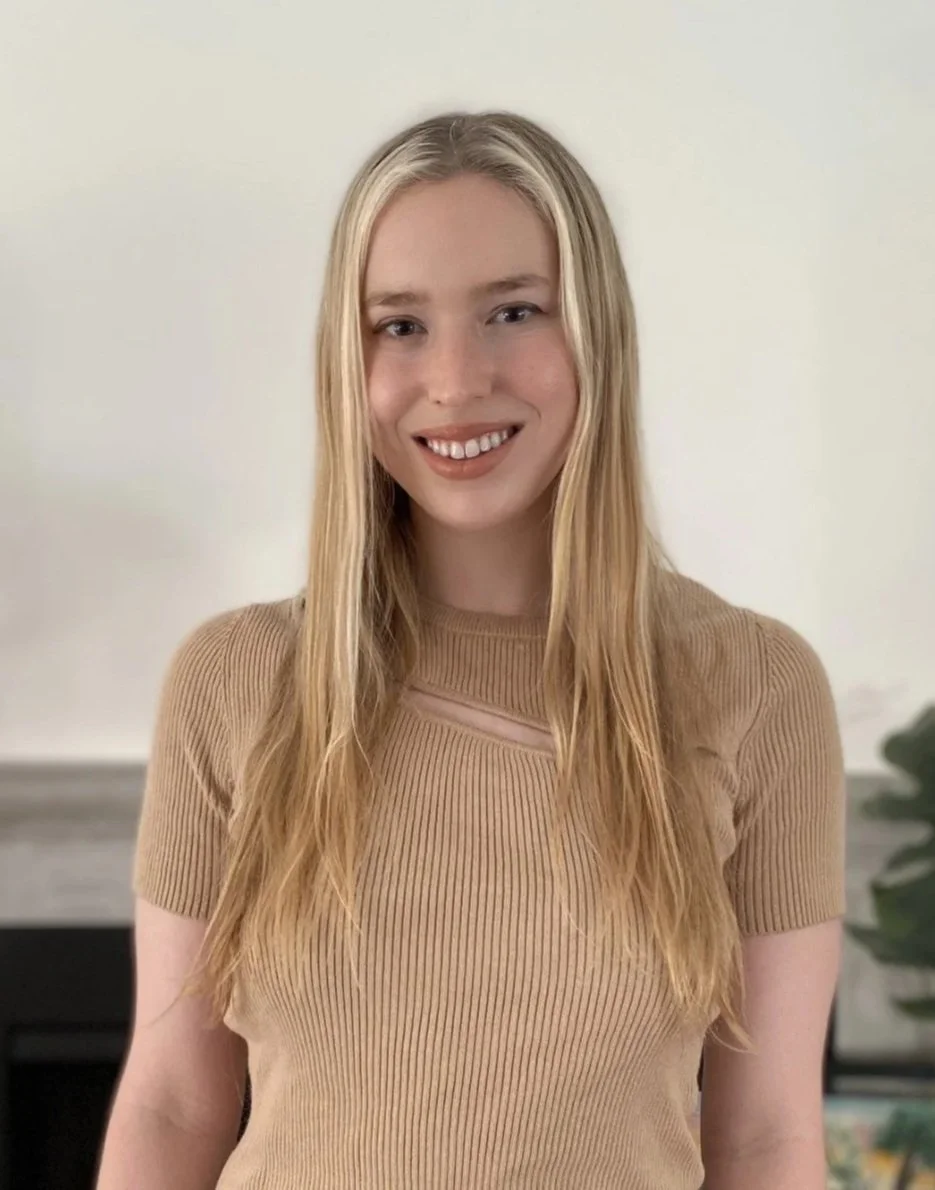
![A young woman with long blonde hair, smiling, wearing a tan ribbed t-shirt, standing in front of a light-colored wall and a plant.]()
Kaitlin Christy, LMFT, APCC
Staff Therapist
Areas of expertise: child, teen, and young adult mental health, emotion dysregulation, anxiety (OCD, panic, phobias), depression, self-esteem, family dynamics, play & art therapy, parent-child work, impulse control, ADHD, and personality disorders.
-
![A young woman with blonde hair, smiling, sitting cross-legged on a wooden bench, holding a gray coffee mug, wearing a light blue button-up shirt and dark pinstripe pants. There is a green potted plant behind her against a plain off-white wall.]()
Sophie Elkins, MSW, ASW
Staff Therapist
Areas of expertise: teen and young adult mental health, anxiety, perfectionism, body image, life transitions, self-esteem, trauma, couples, relationship dynamics, and effective communication strategies.
-
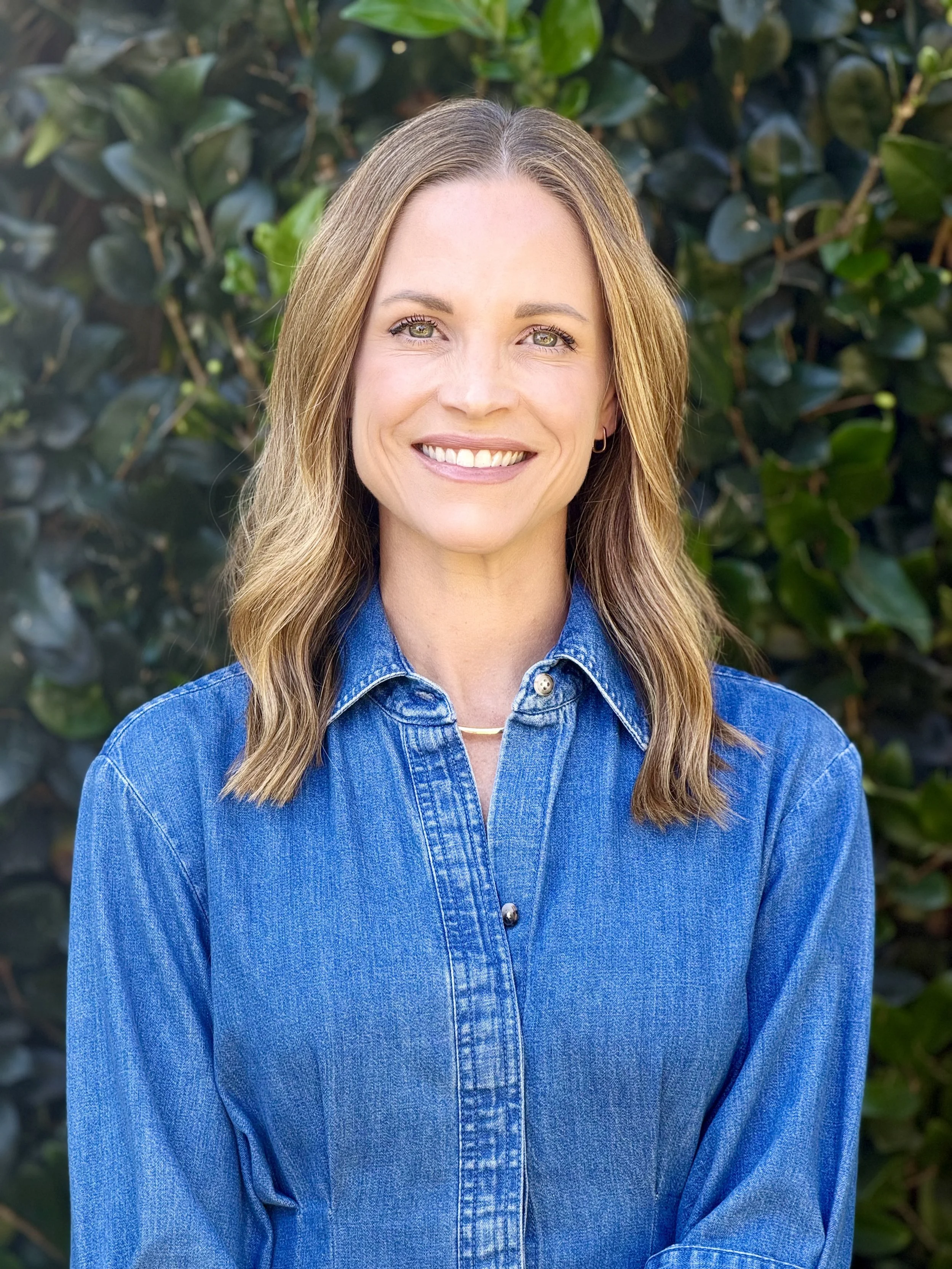
![A woman with wavy blonde hair and light skin smiling, wearing a blue denim shirt, standing outdoors in front of green leafy bushes.]()
Sara Arpiarian, LCSW
Staff Therapist
Areas of expertise: anxiety, depression, relationship and interpersonal challenges, trauma, grief and loss, ADHD, adoption-related issues, parenting skills, and navigating life transitions.



FREQUENTLY ASKED QUESTIONS
-
That depends! Once your therapist meets with you, they will make a recommendation about the skills they think will be most helpful and how many sessions it will take to cover them.
If you’re on board with the plan, go forth! If not, let your therapist know and you can keep customizing until the program feels right.
-
Absolutely not! We recognize that plans and needs can change, and believe your therapy should too. When we say DBT Your Way, we mean it.
-
Sessions can be in-person in West LA or virtually throughout California, New York, Florida, or Vermont.
-
Possibly! While DBT Your Way can cover the same exact skills that are covered in a Comprehensive DBT Program, DBT Your Way does not include certain elements, like phone coaching or group sessions, which are most effective for certain clients.
If you’re unsure whether DBT Your Way is the right fit, please reach out to discuss. Our therapists are always happy to speak with referring providers to help make an informed decision about whether DBT Your Way is an appropriate alternative for Comprehensive DBT.
-
Absolutely! You are welcome to work with another therapist (at or outside of Sawtelle Psychotherapy Group), participate in group therapy, or do anything else that supports your wellbeing! We love to be part of a treatment team and in communication with other providers, so we may suggest signing a release of information to give us permission to coordinate your care.
-
It might not be!
DBT Your Way is not right for clients who:
Are actively suicidal
Need therapeutic support in between sessions
Do not want a skills-based approach, including homework assignments in between sessions
If you aren’t sure whether this program is right for you, we encourage you to reach out.
If you discover once you start that this program isn’t right for you, you can discontinue at any time.